I have been living near Joshua Tree National Park for about two months now, and I’m beginning to wonder how this place came to be and how climate change is affecting it. While wandering through the visitor center on Park Boulevard, I noticed a plaque stating giant sloths planted the Joshua trees we see today. Giant sloths? I couldn’t believe it. These gentle, slow-moving beasts are really the reason why all these crazy trees are covering the southwestern United States?

Shout Out to the Giant Shasta Ground Sloth
The giant Shasta ground sloth went extinct around 12,000 – 13,000 years ago (Nystrom, 2018). This means these sloths existed during the Pleistocene Epoch, or the ice age, when glaciers covered large portions of the Earth. The ice age began around 2.6 million years ago and ended around 11,7000 years ago (Shogren, 2018).
During the 1930s scientists went exploring in the Gypsum Cave right outside of Las Vegas and found skeletons, hair, and poop from a giant sloth . These remains proved that these sloths were “hulking beasts” who resembled a “fuzzy Volkswagen Beetle” (Shogren, 2018). The sloths were able to travel tens of miles across the desert before pooping out the seeds, which acted like a fertilizer. Because the sloths were so large they were also able to eat avocado seeds as well, so we can thank these big guys for both Joshua Trees and avocados (Sloat, 2018).
None of the animals that roam the desert today are capable of spreading and planting Joshua trees like the sloths. Joshua tree seeds are “poorly adapted for dispersal,” because the stomach acid of animals, such as mice and rabbits, will kill the seeds before they get a chance to pass through (Nystrom, 2018).
We must also thank the yucca moths for the existence of Joshua trees; without their pollination the desert would not have as many blooming trees (Nystrom, 2018). For a Joshua tree to survive there must be precise desert conditions including seasonal rains and a winter frost. If winter temperatures continue to decline, the Joshua trees’ chance at flowering could be damaged (Rodgers, 2016).
A Tree of Many Names
Joshua trees (Yucca brevifolia) received their name from Mormans who settled in the Mojave Desert during the mid-19th century. The tree’s twisting branches that open up to the sky reminded them of the biblical story where a man named Joshua throws his hands up in prayer. Before that The Cahuilla tribe began referring to the trees as “humwichawa” (Rodgers, 2016). Throughout history these trees have also been referred to as a “tree yucca” or “yucca palm”, but no matter what one calls them, these trees symbolize unconventional beauty through strength and preservation (Clarke, 2013).
Native American Tribes of the Mojave Desert
The Native Americans who inhabit the southwestern desert include the Serrano, Cahuilla, Chemehuevi, and Mojave (Cultural Systems Research, Inc., 2002). These people don’t see the desert as a barren wasteland, but instead an abundant forest filled with food and resources. They use the rocks as shelter and the Oasis of Mara as a water source. They eat mesquite beans, yucca root, pinyon nuts, berries, fruits, acorns, and cactus fruit (Native Americans in Joshua Tree; Hunter, 2016). Joshua Tree is full of animals including rabbits, bighorn sheep, reptiles, and gophers that are available to eat as well (Cultural Systems Research, Inc., 2002; Hunter, 2016). The tough, desert plants are used for making things such as bows and arrows, baskets, mats, and medicines (Hunter, 2016).
Each tribe settled in different parts of the park, but they are also known to be nomadic to access a variety of resources all over the desert (Cultural Systems Research, Inc., 2002). The territories themselves weren’t all that important to the tribes, but instead the resources that were found in that area (Hunter, 2016).
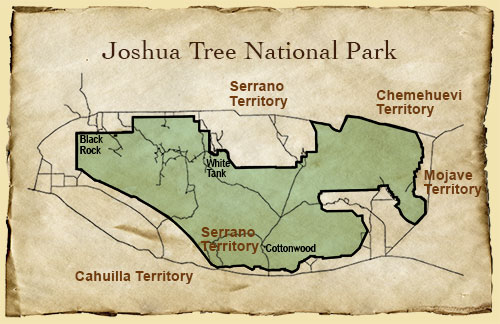
The original Serrano territory consisted of 2,4000 square miles between the San Bernardino Mountains to the Mojave River and Rejob Creek. They lived in villages made up of kiich houses, which are dome-shaped huts made out of willow poles and long sticks that are covered with brush and yucca fiber. These kiich houses were about 12-14 feet in width and length and were dug about two feet into the ground to combat the extreme heat during the day and the frigid coldness at night. Mats made out of yucca covered the floors and a hole in the roof allowed for fires to keep warm at night. The Serrano people normally built their kiich houses close to lakes, rivers, or streams in the San Bernardino highlands. The name “Serrano,” is actually Spanish for “highlander” or “mountaineer,” which reflected the geography of their territory (Serrano Tribe, 2018).
This was until Spanish people forced them to move to missions. “The Spanish established the Mission System in Southern California to convert Native Indian tribes to Christianity and enslave them” (Serrano Tribe, 2018). Eventually Mexican people forced Native people to work on their farms in Alta and Baja California. Americans showed up to the Mojave Desert soon enough to participate in the gold rush, which resulted in a small pox epidemic killing many of the Serrano people. After the Gara Revolt—a failed attempt by Native Americans to drive settlers out of their territory during 1851—the natives who survived were forced to settle in various reservations (San Diego History: Garra’s Uprising, 1992; Serrano Tribe, 2018).
The Chemehuevi people traveled to Southern California around four hundred years ago and their territory was in the eastern part of the national park, which includes Pinto Basin and the Coxcomb Mountains. During the late eighteenth century, the tribe migrated to the Colorado River, but they were forced to leave when a war broke out between them and the Mojave Tribe. Eventually they returned to their former territory by the Colorado River (Hunter, 2016).
The Cahuilla territory is found between the Colorado River and the San Jacinto plain. This tribe lived near water sources in small villages in the southwestern area of the park. They were nomadic hunter-gathers during the spring and summer and lived in their villages to stay warm during the winter (Hunter, 2016).
The Serrano, the Chemehuevi, and the Cahuilla peoples left pictographs and petroglyphs within the rock formations in the Mojave Desert. They collectively used 121 plant species for food, medicine, or materials. By 1913 there were no longer natives at the Oasis of Mara, which originally belonged to the Serrano people, because the smallpox epidemic emptied out the area. Colonel Henry Washington changed the name of the oasis to Twentynine Palms (Hunter, 2016).
Towers of Rocks
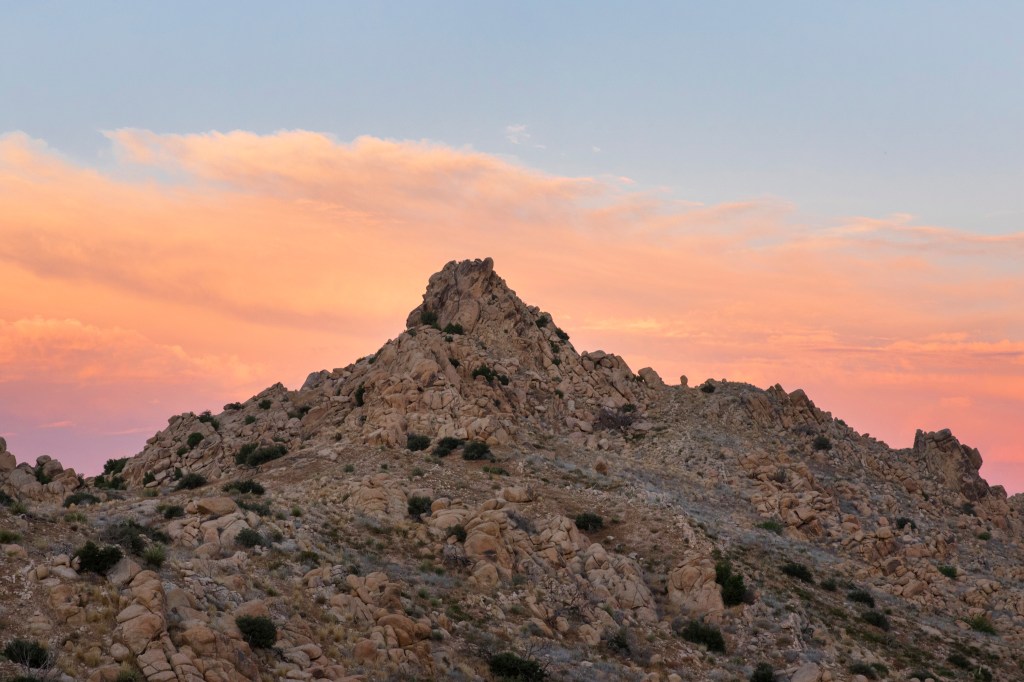
Joshua Tree is also known for towering rock formations. These rocks are here because of process that took millions of years. The plate tectonics beneath the Earth’s surface cause magma to form and then cool. After the magma spread throughout the rock it cooled and cracked under pressure around 100 million years ago. The ground above the magma eroded away allowing water to seep into the cracks and turning rock into soil. The soil eventually weared away leaving the rock towers we see all over the park today (Geologic Formations, 2017). These processes are still taking place today, and the National Park Service made an awesome video displaying this process here.
The Protector of the Trees
We can thank Minerva Hoyt, a southern belle from Mississippi who moved to Pasadena, for the national park’s existence. While living in California she immersed herself in high society and civic cases. She was a talented organizer for charity events and had a love for gardening. Her trips to the high desert allowed her to fall in love with flora that thrives in harsh climates. Other people would damage the plants by digging them up, burning them, or destroying them in other ways made her upset, so she “dedicated herself to the cause of protecting [the] desert landscape” (Zarki, 2015). She organized desert plant exhibitions in major cities such as Boston, New York, and London, and she hired biologists and desert ecologists to study and report on the Joshua tree ecosystem. She eventually met President Franklin Roosevelt, who signed a presidential proclamation that established Joshua Tree as a National Monument on August 10, 1936, which meant the area was protected (Zarki, 2015).
Establishing the National Park
It wasn’t until 58 years later in 1994 when Joshua Tree became a national park (History & Culture, 2019). The park is 794,000 acres, which is around the size of Rhode Island, and the park receives 2.8 million visitors a year (Clarke, 2013; National Geographic Staff, 2019).
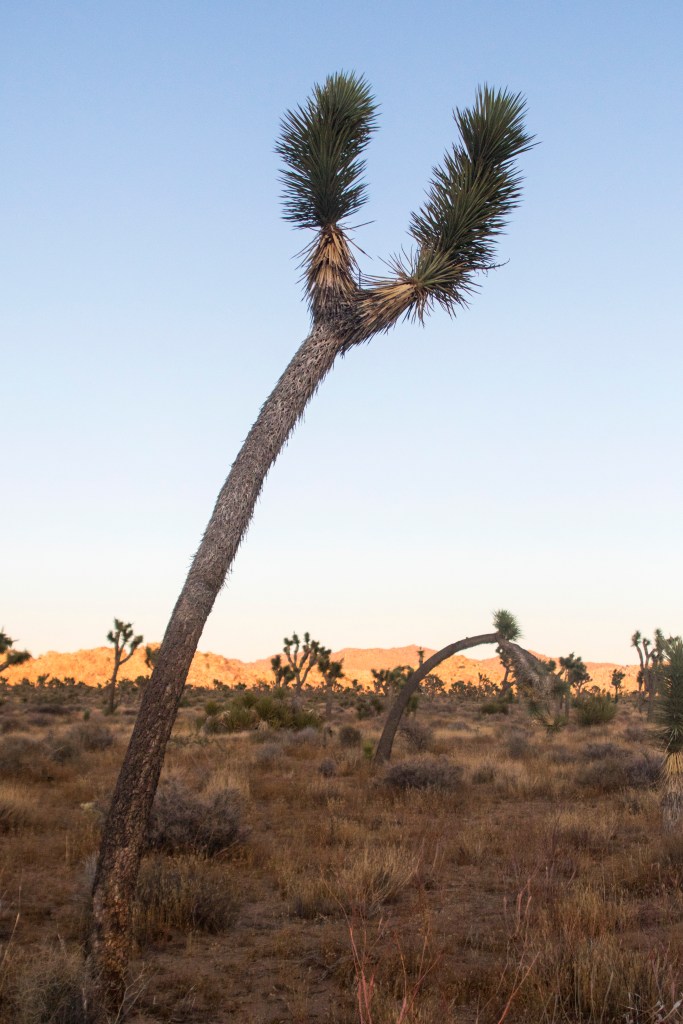
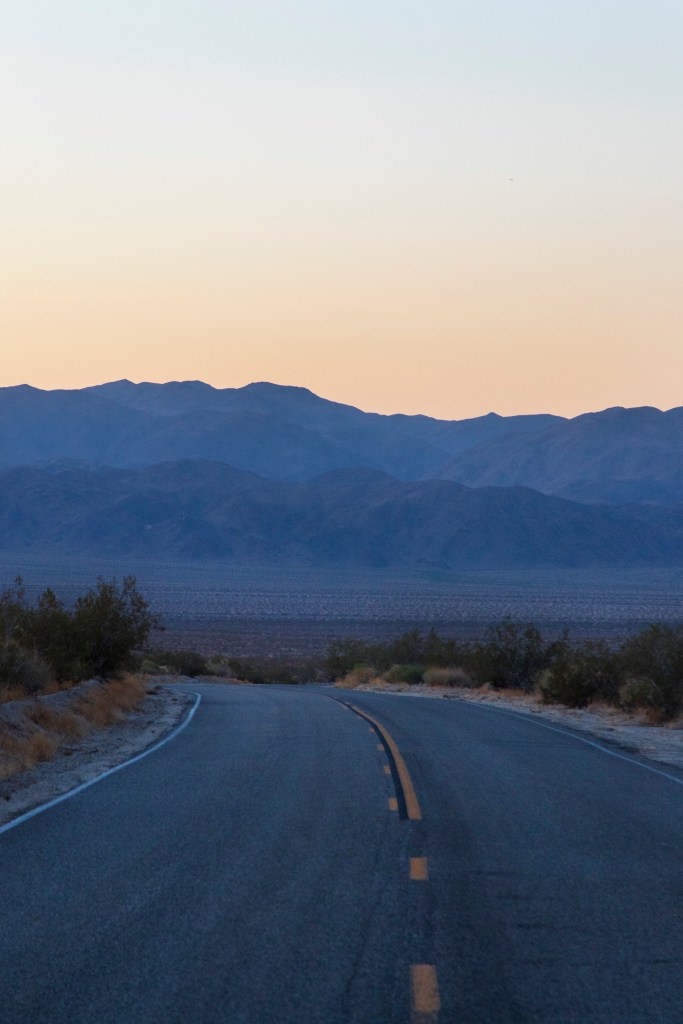
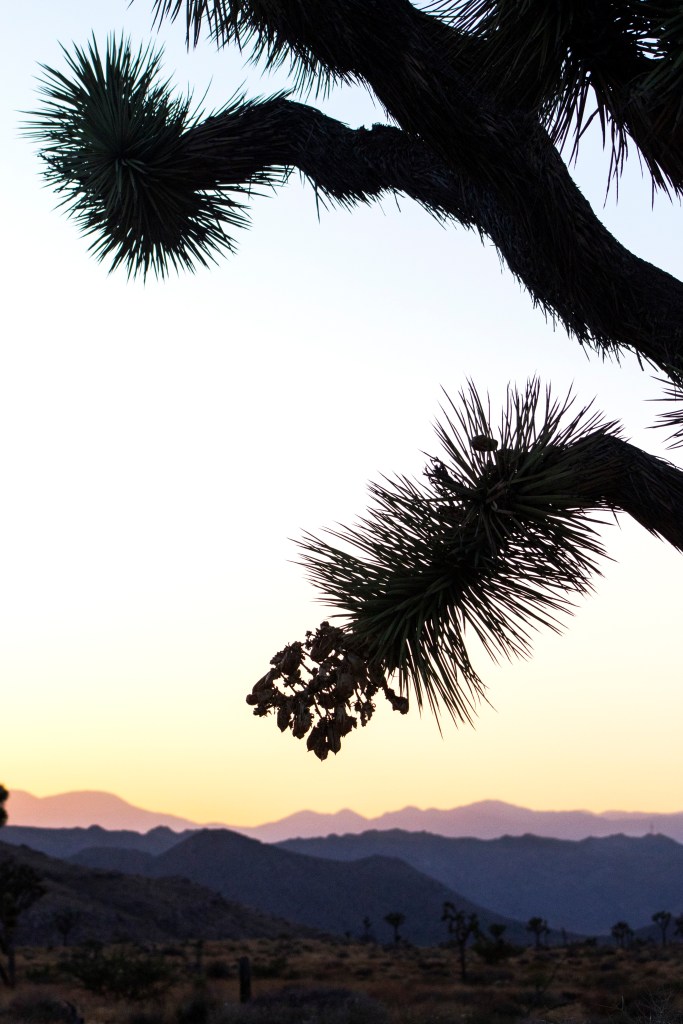
The protection of the Joshua trees is very important, because so many creatures depend on these trees for survival. For the first five years of their life they grow very quickly, but then only grow a maximum of three inches per year after that (Clarke, 2013; Rodgers, 2016). The tallest Joshua tree in the park is around 40 feet high located along Queen Valley Road. It is much harder to estimate the age of Joshua trees, because they do not have growth rings like other trees, so the age estimates come from measuring the height of the Joshua tree. An average lifespan for a Joshua tree is around 150 years, but the taller ones could be much older. The Joshua trees are important to the Mojave Desert ecosystem because they provide habitats and food for birds, mammals, insects, and lizards (Rodgers, 2016). A Scott’s oriole may make a nest high up in the branches of a Joshua tree, so they have a panoramic view of the land to watch for predators. Or a wood rat could build a nest close to some rocks while using the sharp yucca spikes for protection (Rodgers, 2016). Many animals survive by gnawing through the Joshua tree’s bark to access water when the air is really dry (Shogren, 2018).
Climate Change
Climate change poses as a huge threat to this national park and all those who inhabit it. Global warming may cause the Joshua trees to disappear, and the tree population has already shrunk to 1/10 of what it was (Shogren, 2018). The high desert will most likely be too warm in 50-100 years for Joshua trees to live, or they will grow in higher, cooler places. Many Joshua trees are dying, but there are not many being planted due to the absence of our friend, the giant Shasta ground sloth. They are also constantly battling the “nitrogen-rich smog from the Los Angeles Basin,” which “is feeding invasive grasses that threaten the Joshua trees’ desert habitat and eventually become fuel for wildfires that could also decimate the trees” (The Times Editorial Board, 2019). Future research shows that Joshua Tree National Park will become a hostile environment with extreme high and low temperatures if humans don’t restrain carbon emissions (The Times Editorial Board, 2019).
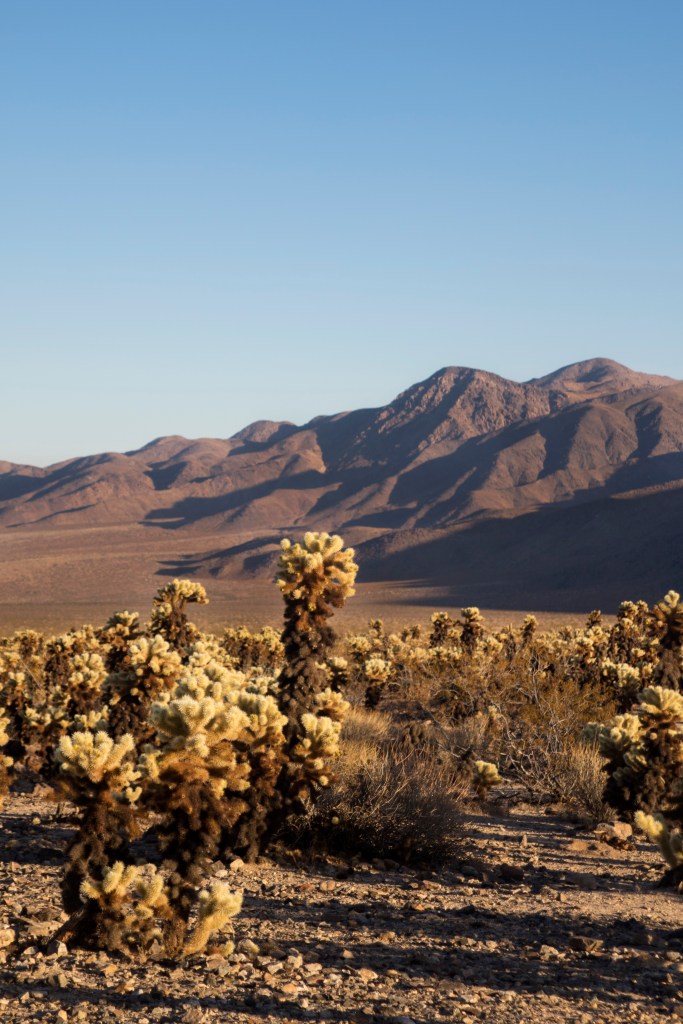
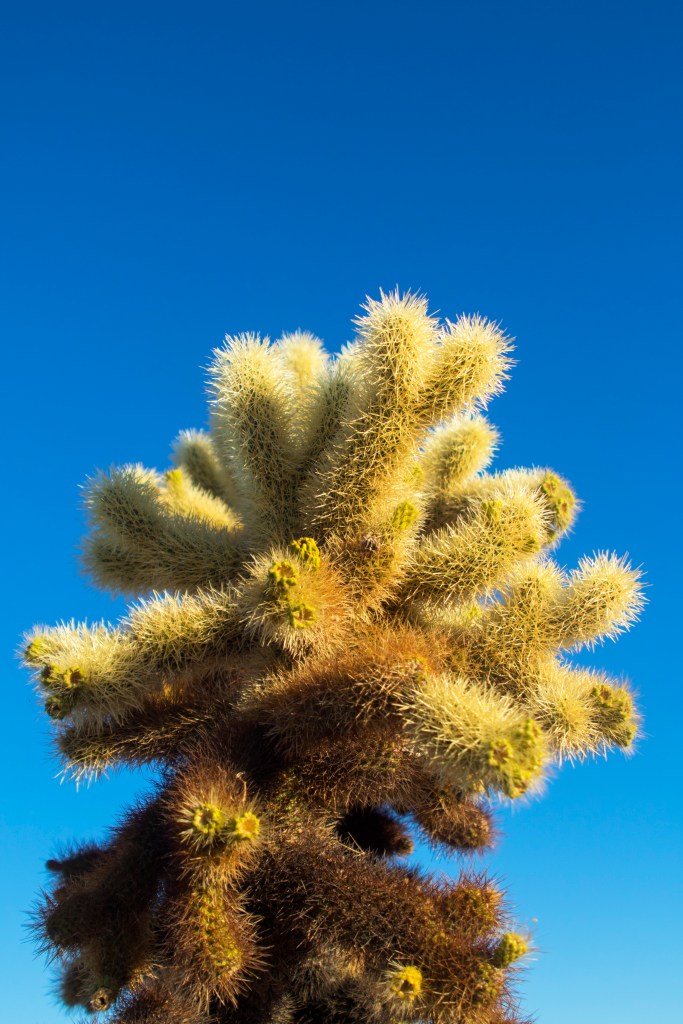
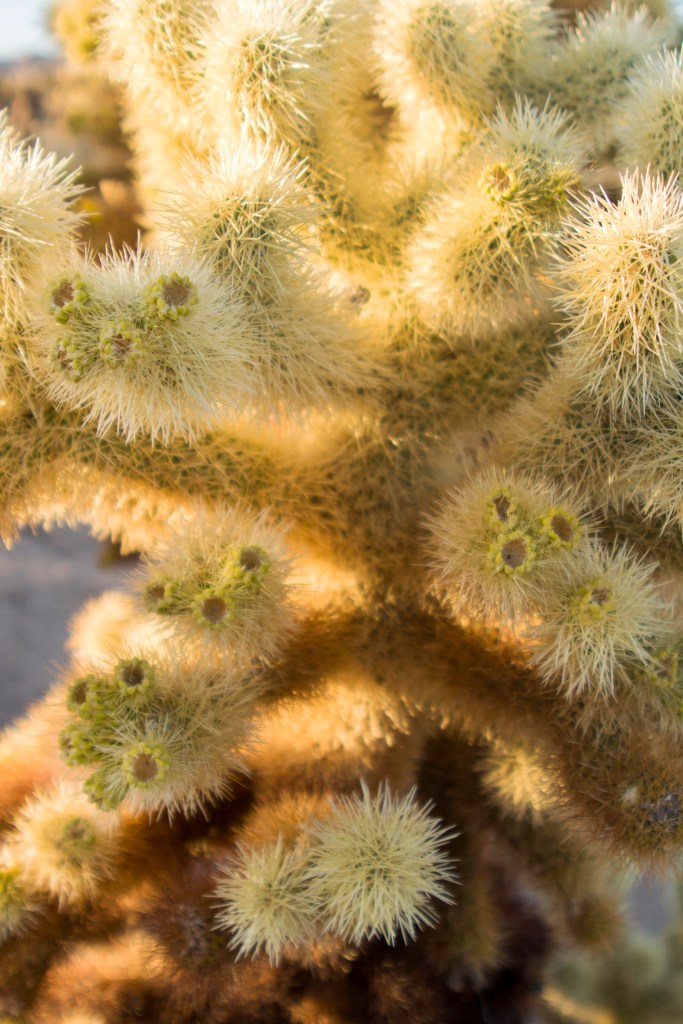
Development pressures are another huge risk to the Mojave Desert. “About 40% of the trees’ habitat is on private land, and housing tracts, roads, shopping centers, renewable energy facilities, power lines and other projects all whittle away at their numbers” (The Times Editorial Board, 2019). Despite the trees endangerment, last year the Trump administration rejected the request to list Joshua trees as threatened under the federal Endangered Species Act. If this request passed it would have been much easier to block projects that threaten the trees’ livelihood (The Times Editorial Board, 2019).
What You Can Do To Help
So what can we do to help reverse the effects of climate change? Here’s a few things you can easily do when visiting the park:
- Stay on trails when hiking and on the paved or dirt road when driving. Wandering into the desert wilderness can damage the flora in that area.
- Leave no trace. This means plastic, food waste, beer bottles, toilet paper, etc.
- Don’t hang on trees or hammock. This is extremely harmful to the trees.
- Don’t fly drones. Drones have been known to scare away birds and other animals thus ruining the entire ecosystem.
- Watch for desert tortoises or other animals when driving. Driving through the park is so fun, but make sure you aren’t harming any animals while doing it.
- Camp in designated areas instead of renting an Airbnb. The airbnb industry is thriving in Joshua Tree, but unfortunately building these “vacation homes” everywhere is harmful to the environment. Give your money to the park instead by camping inside the park or camp for free on BLM land north of the park.
A few other things you can do in your everyday life to help reverse the effects of climate change include:
- Vote for politicians who care about the effects of climate change.
- Don’t support large cooperations—such as Amazon (who also owns Whole Foods) or Walmart (who also owns Moosejaw) or Nestle—who largely contribute to the exploitation of our planet.
- Cut meat out of your diet or reduce your intake of meat (especially beef). Millions of gallons of water are wasted every day to raise animals for slaughter.
If we want future generations to enjoy and heal in Joshua Tree National Park, then we need to take responsibility for our actions, change our everyday lifestyle, and push political leaders to be more aggressive when caring for our planet (National Geographic Staff, 2019). Human-caused climate change will continue to damage our earth unless the entire human race, including the one percent, takes action for the devastation to various ecosystems, because our species won’t survive without a healthy planet.
Bibliography
Clarke, C. (2013, June 11). How Did the Joshua Tree Get its Name?. In KCET. Retrieved from https://www.kcet.org/redefine/how-did-the-joshua-tree-get-its-name
Cultural Systems Research, Inc. (2002, August 22). Joshua Trees. In National Park Service. Retrieved from https://www.nps.gov/parkhistory/online_books/jotr/history3.htm
Geological Formations (2017, October 2). In National Park Service. Retrieved from https://www.nps.gov/jotr/learn/nature/geologicformations.htm
History & Culture (2019, November 12). In National Parks Service. Retrieved from https://www.nps.gov/jotr/learn/historyculture/index.htm
Hunter, C. (2016, March 22). American Indians. In National Park Service. Retrieved from https://www.nps.gov/jotr/learn/historyculture/indians.htm
National Geographic Staff. (2019, August 26). Everything to know about Joshua Tree National Park In National Geographic. Retrieved from https://www.nationalgeographic.com/travel/national-parks/joshua-tree-national-park/
Native Americans in Joshua Tree (n.d.). In Sand to Stone. Retrieved from http://sandtostone.org/native-americans-jt.htm
Nystrom, S. (2018, February 25). Joshua Tree Woodlands: A Tale of Sloths, Moths and the Trees that Need Them. In Natural History Journal. Retrieved from http://natural-history-journal.blogspot.com/2018/02/joshua-tree-woodlands-tale-of-sloths.html
Rodgers, J. (2016, March 21). Joshua Trees. In National Park Service. Retrieved from https://www.nps.gov/jotr/learn/nature/jtrees.htm
San Diego History: Garra’s Uprising (1992, August 10). In Los Angeles Times. Retrieved from https://www.latimes.com/archives/la-xpm-1992-08-10-me-4992-story.html
Serrano Tribe (2018, January 16). In Native Indian Tribes. Retrieved from https://www.warpaths2peacepipes.com/indian-tribes/serrano-tribe.htm
Shogren, E. (2018, February 4). Outlook Bleak for Joshua Trees. In NPR. Retrieved https://www.npr.org/templates/story/story.php?storyId=17628032
Sloat, S. (2018, January 3). This Ancient Pooping Sloth is the Reason We Have Avocados Today. In Inverse. Retrieved from https://www.inverse.com/article/39903-avocado-giant-sloth-lestodon-museum
The Times Editorial Board. (2019, October 17). Editorial: Climate change is wiping out California’s Joshua trees. Of course we should protect them In Los Angeles Times. Retrieved from https://www.latimes.com/opinion/story/2019-10-17/joshua-trees-endangered-species-climate-change?fbclid=IwAR00WYQyMbVjvFzNow15898SQDyAhDDJLejLHk2VUhcxbK3i4Df_mo9m9Ts
Zarki, J. (2015, February 28). Minerva Hoyt. In National Park Service. Retrieved from https://www.nps.gov/jotr/learn/historyculture/mhoyt.htm
 RILEY J ROAMS
Leave a comment