Winter came in the form of chilling wind howling through the desert and homesickness for familiar faces and places. Molly and I packed our cars in preparation for another cross-country road trip in much different weather conditions.
Sunday, December 1, 2019: Yucca Valley, CA – Death Valley National Park, CA
Snow-covered mountains towered in the distance as we wandered around our property for the last time. We returned the house back to its original state and said goodbye to our desert sanctuary. We stopped by the visitor center to buy a few last-minute souvenirs and then headed into the park before driving towards Death Valley. How was my stay here already over? This time in the desert allowed me to focus on myself and my own healing from everything that happened in college with few distractions from others.
I woke up before the sunrise to take photos during the best lighting.
The four and a half hour drive through the desert was magnificent. Because it was winter, the sun was setting around five, which made our days of adventuring much shorter. By the time we got to Shoshone, a town right next to the national park with zero cell service, it was dark. We found a few free campsites beforehand, but we had issues finding them without cell service. We drove back to the main road and eventually found a motel. The lady behind the front desk told us about the Shoshone RV Park, which was right down the street. When we arrived we went to the front office where a little man told us about the campsite and his favorite spots in Death Valley. We paid $22.50 for a campsite, which was lined with palm trees and had bathrooms and showers nearby.
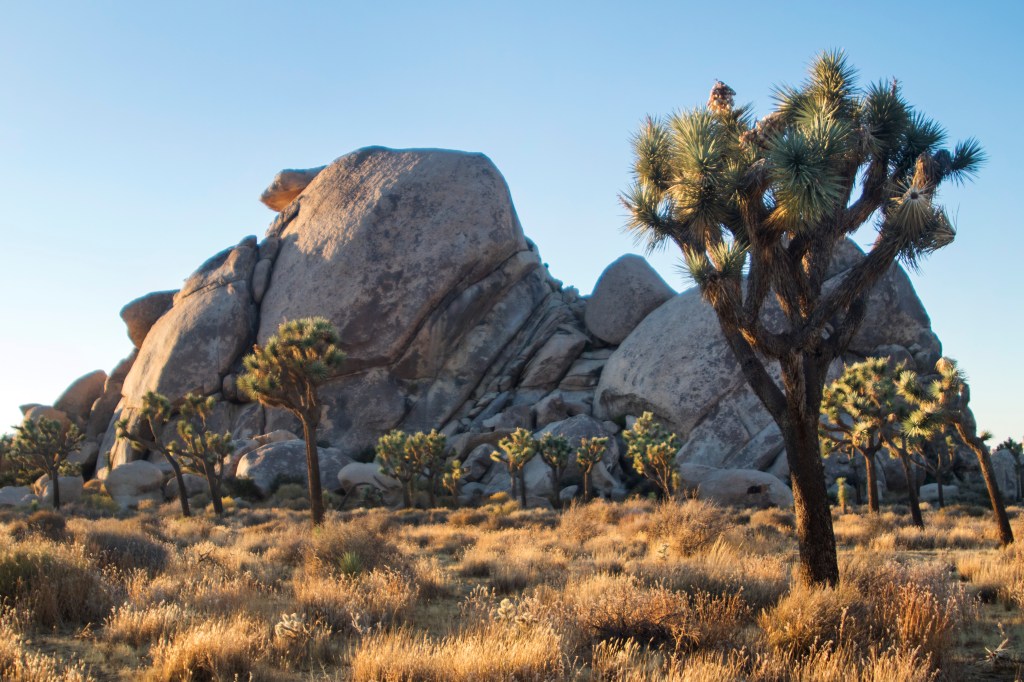
A completely different experience comes with living somewhere versus visiting, and I was lucky enough to live in Joshua Tree. Although I have visited the high desert three times before moving here, I was able to understand this place in a completely different way after these two months. The changing of seasons came to my surprise as 90-degree temperatures quickly dropped and snow sprinkled upon the desert mountains. Both star-covered skies and full moons illuminating the desert emptiness came and went. I had ample time to get to know the park like my own backyard and complete the same hikes multiple times. September and October were the perfect months to live here while temperatures were still warm and the park was not yet overpopulated with people.
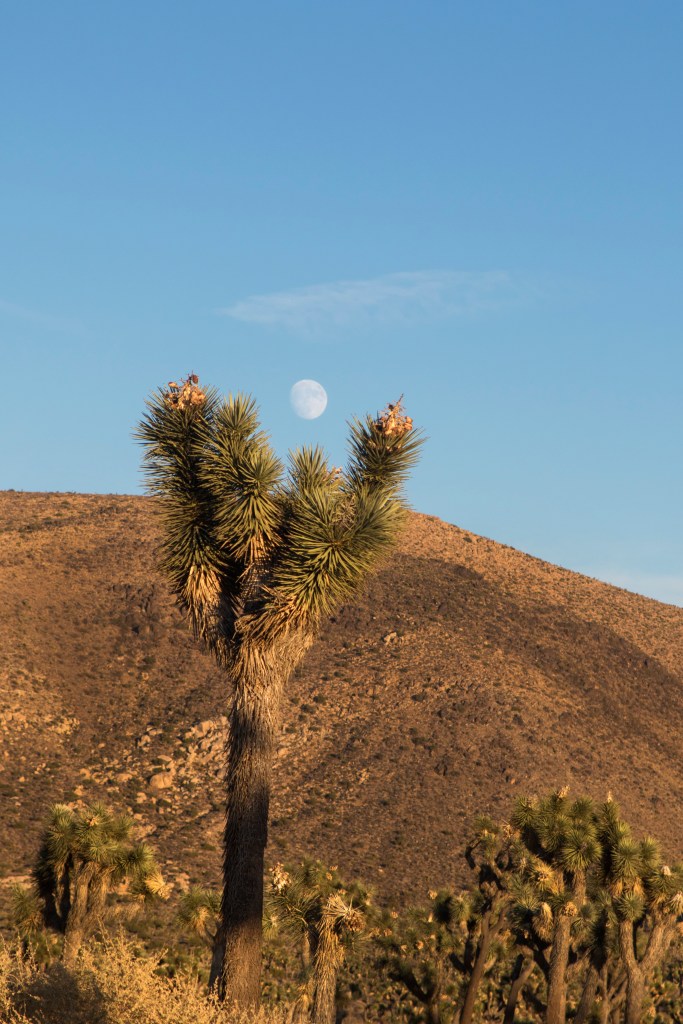
A waning gibbous moon rising right before sunset.
The House
The Airbnb we rented was tucked away on a dirt road on the top of a hill in Yucca Valley. The house is a duplex on two acres of land that runs completely on solar power. It features a screened-in porch where I could watch people walking their horses along the dirt path on cooler days. Our secluded porch was the perfect place for morning yoga and working on projects. The inside of the house didn’t have any doors in between the rooms except for the bathroom, so the space felt wide open and had a stone floor to make it feel like I was never leaving the outdoors.
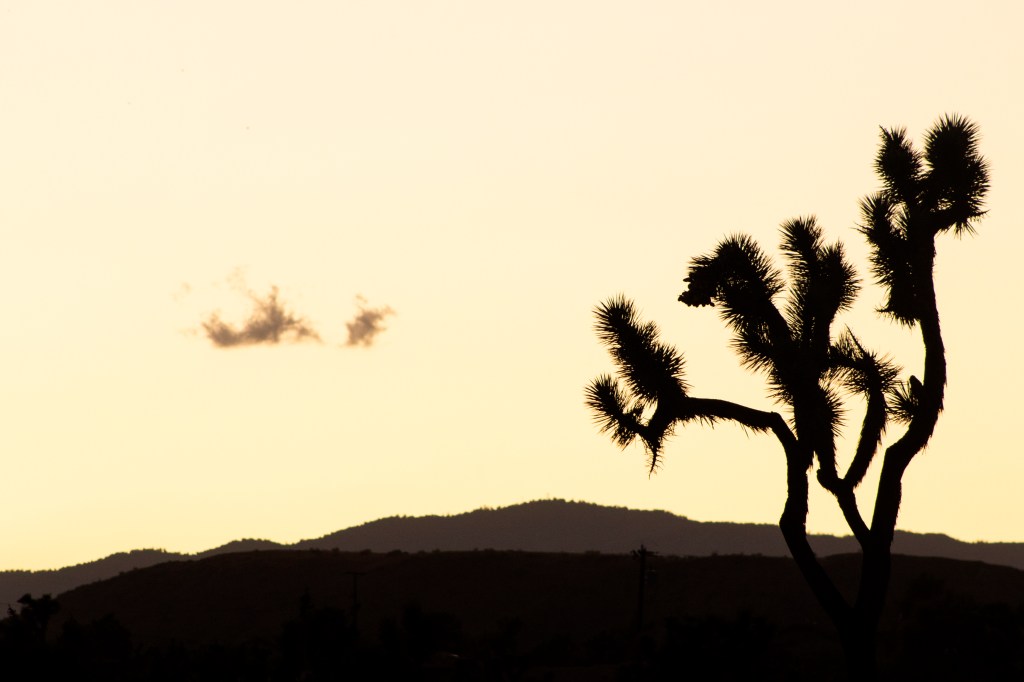
The sunsets made me feel like I was in a simulation.(more…)
I have been living near Joshua Tree National Park for about two months now, and I’m beginning to wonder how this place came to be and how climate change is affecting it. While wandering through the visitor center on Park Boulevard, I noticed a plaque stating giant sloths planted the Joshua trees we see today. Giant sloths? I couldn’t believe it. These gentle, slow-moving beasts are really the reason why all these crazy trees are covering the southwestern United States?
Shout Out to the Giant Shasta Ground Sloth
The giant Shasta ground sloth went extinct around 12,000 – 13,000 years ago (Nystrom, 2018). This means these sloths existed during the Pleistocene Epoch, or the ice age, when glaciers covered large portions of the Earth. The ice age began around 2.6 million years ago and ended around 11,7000 years ago (Shogren, 2018).
During the 1930s scientists went exploring in the Gypsum Cave right outside of Las Vegas and found skeletons, hair, and poop from a giant sloth . These remains proved that these sloths were “hulking beasts” who resembled a “fuzzy Volkswagen Beetle” (Shogren, 2018). The sloths were able to travel tens of miles across the desert before pooping out the seeds, which acted like a fertilizer. Because the sloths were so large they were also able to eat avocado seeds as well, so we can thank these big guys for both Joshua Trees and avocados (Sloat, 2018).






 RILEY J ROAMS